
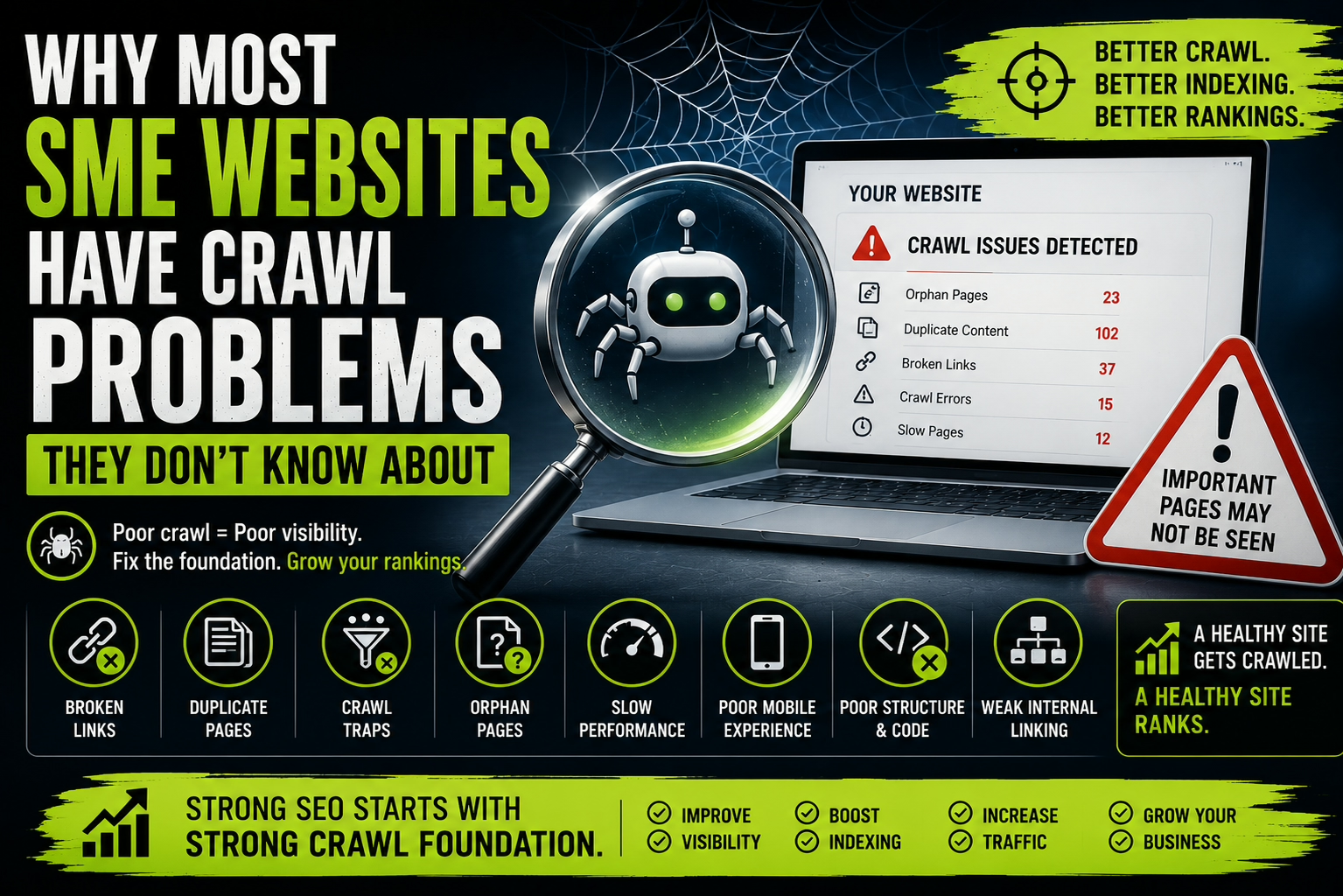
Why Most SME Websites Have Crawl Problems They Don’t Know About
Most South African SMEs assume that if their website is online, Google can see it properly.
In reality, many business websites are only partially visible to search engines.
Pages exist but are rarely crawled.
Important services remain undiscovered.
Product pages become buried.
Content gets indexed slowly — or not at all.
Technical clutter quietly consumes crawl resources.
The business owner sees a functioning website.
Google sees confusion.
This is one of the most overlooked problems in modern SEO:
crawl inefficiency.
Many SMEs invest heavily in:
- website design,
- social media,
- advertising,
- and content creation,
while their actual search infrastructure remains weak beneath the surface.
The result is often frustrating:
- inconsistent rankings,
- weak visibility,
- declining traffic,
- poor indexing,
- and unpredictable SEO performance.
Most businesses never realise the root problem is crawl architecture.
As search engines become increasingly AI-driven and semantically focused, crawl efficiency matters more than ever. Modern search systems rely on:
- efficient discovery,
- structured relationships,
- semantic clarity,
- and technically accessible websites.
If search engines struggle to crawl your website efficiently, visibility declines long before rankings collapse completely.
This is why Technical SEO South Africa is becoming increasingly important for SMEs competing online.
The businesses with the clearest, most crawlable websites will increasingly dominate future search visibility.
What Is Website Crawling?
Before a website can rank on Google, it first needs to be:
- discovered,
- crawled,
- interpreted,
- and indexed.
Crawling is the process where search engines send automated bots — often called crawlers or spiders — to explore websites.
These crawlers:
- visit pages,
- follow links,
- analyse content,
- interpret structure,
- and store information inside search indexes.
Without proper crawling, visibility becomes limited.
Crawling Is Not Unlimited
One of the biggest misconceptions among SMEs is that Google crawls everything equally.
It does not.
Search engines allocate limited crawl resources to each website.
This is sometimes referred to as crawl budget.
Websites that are:
- slow,
- confusing,
- technically messy,
- or structurally fragmented,
often waste crawl resources.
Important pages may never receive enough attention.
Crawl Efficiency Matters
A well-structured website helps search engines:
- discover important pages quickly,
- understand relationships,
- prioritise valuable content,
- and interpret relevance efficiently.
Poor crawl architecture creates friction.
The more friction your website creates, the harder it becomes for search systems to understand your business properly.
Why Most SME Websites Develop Crawl Problems
Crawl problems rarely happen intentionally.
They usually develop gradually as websites evolve.
Poor Website Structures
Many SME websites are built without long-term SEO architecture in mind.
Pages are often added randomly over time:
- service pages,
- blog posts,
- duplicate landing pages,
- outdated promotions,
- and disconnected content.
Eventually, the website loses structural clarity.
Cheap Website Builds
Many low-cost websites prioritise appearance over technical quality.
Common issues include:
- bloated themes,
- excessive plugins,
- broken internal links,
- poor mobile optimisation,
- and weak navigation structures.
The website may look visually acceptable while performing poorly technically.
Plugin Overload
WordPress websites frequently accumulate unnecessary plugins.
Each plugin may generate:
- duplicate pages,
- unnecessary scripts,
- crawl waste,
- parameter URLs,
- or rendering issues.
Over time, the website becomes increasingly difficult for search engines to process efficiently.
Ecommerce Complexity
WooCommerce and ecommerce websites often develop severe crawl issues through:
- duplicate category structures,
- faceted navigation,
- filtering URLs,
- product variations,
- and pagination problems.
Without proper management, search engines waste enormous crawl resources on low-value pages.
Common Crawl Problems SMEs Don’t Notice
Many crawl problems remain invisible to business owners because the website still “works.”
But search engines experience the site very differently.
Orphan Pages
Orphan pages are pages with no internal links pointing to them.
Search engines struggle to discover these pages naturally.
Many service pages, blog posts, and landing pages become effectively invisible.
Duplicate Pages
Duplicate content often appears through:
- multiple URL versions,
- category duplication,
- tag pages,
- filtered URLs,
- and printer-friendly pages.
This creates crawl confusion.
Search engines waste resources processing duplicate information instead of prioritising important content.
Broken Internal Linking
Internal links help search engines understand:
- hierarchy,
- relationships,
- and page importance.
Weak linking structures isolate valuable content.
Slow Website Speed
Slow websites reduce crawl efficiency significantly.
If pages:
- load slowly,
- rely heavily on JavaScript,
- or overwhelm rendering systems,
search engines crawl fewer pages.
Technical performance directly affects visibility.
Poor Mobile Rendering
Google primarily evaluates websites through mobile-first indexing.
Websites with weak mobile usability often experience:
- rendering problems,
- incomplete crawling,
- and indexing instability.
Crawl Traps
Some websites unintentionally create endless crawl pathways through:
- filters,
- search results,
- calendar pages,
- and parameter variations.
Search engines become trapped crawling low-value pages repeatedly.
Why Crawl Problems Hurt SEO
Crawl inefficiency creates far more damage than many SMEs realise.
Important Pages Get Ignored
If crawl resources are wasted, search engines may prioritise:
- low-value pages,
instead of: - core services,
- high-converting content,
- or important product pages.
Indexing Becomes Slower
New pages may take longer to appear in search results.
Content updates may also take longer to process.
Rankings Become Unstable
Poor crawl architecture creates inconsistent search visibility.
Google struggles to understand:
- which pages matter most,
- which content is authoritative,
- and how pages relate to each other.
AI Search Systems Prefer Clean Structures
Modern AI-driven search increasingly favours:
- structured websites,
- semantically organised content,
- and technically accessible environments.
Messy websites create retrieval friction.
Crawl Problems Reduce Topical Authority
Search engines increasingly evaluate:
- expertise,
- authority,
- and topical consistency.
Fragmented crawl structures weaken contextual understanding.
How AI Search Is Making Crawl Efficiency More Important
Search is evolving rapidly.
AI systems now increasingly evaluate websites semantically rather than simply matching keywords.
Search Engines Need Clear Relationships
AI search systems attempt to understand:
- what your business does,
- which services you specialise in,
- how pages connect,
- and what topics you are authoritative on.
This depends heavily on crawl clarity.
Semantic SEO Depends on Structure
Semantic SEO South Africa increasingly relies on:
- logical hierarchy,
- internal linking,
- crawlable architecture,
- and contextual relationships.
A disorganised website weakens semantic understanding.
AI Retrieval Systems Prefer Efficient Websites
AI-powered search systems increasingly prioritise websites that are:
- easy to crawl,
- easy to interpret,
- semantically clear,
- and technically stable.
Future SEO visibility will increasingly reward infrastructure quality.
The Hidden Technical Issues Behind Crawl Problems
Many SMEs unknowingly create crawl inefficiency through technical decisions.
JavaScript Overuse
Modern websites increasingly rely on heavy JavaScript frameworks.
This creates:
- rendering delays,
- crawl inefficiency,
- and incomplete indexing.
Search engines can process JavaScript, but excessive complexity creates friction.
Weak URL Structures
Poor URL structures reduce clarity.
Examples include:
- random parameters,
- inconsistent naming,
- duplicate slugs,
- and unclear hierarchy.
Clean URLs improve crawl understanding.
Indexing Low-Value Pages
Many websites accidentally allow indexing of:
- tag pages,
- archives,
- search results,
- attachment pages,
- and filtered URLs.
These pages dilute crawl efficiency.
Missing XML Sitemaps
XML sitemaps help search engines discover:
- important pages,
- new content,
- and structural hierarchy.
Poor sitemap implementation weakens crawl visibility.
Poor Canonicalisation
Canonical tags help search engines understand:
- preferred page versions,
- duplicate relationships,
- and indexing priorities.
Incorrect canonical setup creates confusion.
How SMEs Can Improve Crawl Efficiency
The good news is that crawl problems are usually fixable.
Simplify Website Structure
Websites should have:
- clear navigation,
- logical categories,
- consistent hierarchy,
- and simple pathways.
Structure matters.
Strengthen Internal Linking
Every important page should connect naturally through:
- menus,
- contextual links,
- service relationships,
- and topical clusters.
Internal links guide crawlers.
Improve Technical Performance
Fast websites improve crawl efficiency dramatically.
Businesses should optimise:
- mobile speed,
- hosting quality,
- image compression,
- caching,
- and rendering performance.
Reduce Technical Clutter
Removing unnecessary:
- plugins,
- duplicate pages,
- outdated content,
- and low-value URLs,
improves crawl focus.
Use Structured Data
Schema markup helps search engines understand:
- services,
- products,
- locations,
- FAQs,
- and business entities.
Structured websites perform better semantically.
Monitor Crawl Health
Businesses should regularly audit:
- broken links,
- indexing issues,
- crawl errors,
- duplicate pages,
- and mobile usability.
Technical SEO should be ongoing, not reactive.
Why Crawl Efficiency Is Becoming a Competitive Advantage
Most SMEs still focus only on:
- rankings,
- keywords,
- and social media visibility.
Very few focus on search infrastructure quality.
This creates opportunity.
Better Crawl Architecture Creates Stronger SEO
Businesses with:
- cleaner websites,
- better hierarchy,
- faster performance,
- and stronger semantic structure,
gain long-term visibility advantages.
AI Search Will Reward Technical Clarity
Future search visibility increasingly depends on:
- machine readability,
- semantic organisation,
- and crawl accessibility.
Technical quality is becoming a trust signal.
SMEs Can Still Adapt Early
Many South African businesses remain technically under-optimised.
SMEs investing in:
- Technical SEO South Africa,
- crawl optimisation,
- semantic structure,
- and AI-ready websites,
can gain a major competitive edge.
The Future of Crawl Optimisation
Search engines are becoming:
- smarter,
- more contextual,
- more AI-driven,
- and more semantically focused.
This changes the role of technical SEO completely.
Websites Are Becoming Search Infrastructure
A modern website is no longer just a digital brochure.
It is:
- a search discovery system,
- a semantic entity framework,
- and a machine-readable business environment.
Crawl Efficiency Will Influence AI Visibility
Future AI systems will increasingly prefer:
- efficient websites,
- semantically organised information,
- and technically stable structures.
Crawl optimisation is becoming AI optimisation.
Technical SEO Is No Longer Optional
For SMEs competing online, technical SEO is becoming foundational infrastructure.
The businesses that invest early in:
- crawl architecture,
- semantic SEO,
- mobile performance,
- and structured content,
will increasingly outperform competitors.
Conclusion
Most SME websites have crawl problems they never notice.
The website appears functional to users while search engines experience:
- technical clutter,
- crawl waste,
- semantic confusion,
- and structural inefficiency.
These problems quietly reduce:
- visibility,
- rankings,
- indexing efficiency,
- and long-term SEO performance.
As AI search systems evolve, crawl efficiency matters more than ever.
Future SEO success will increasingly depend on:
- technical clarity,
- semantic structure,
- machine readability,
- and crawl accessibility.
Businesses that continue ignoring technical SEO risk becoming progressively less visible online.
At EC Business Solutions, SEO strategies are built around:
- technical SEO,
- crawl optimisation,
- semantic SEO,
- AI-ready websites,
- and long-term digital visibility infrastructure.
The future of SEO belongs to businesses whose websites are not only attractive to users — but understandable to search engines and AI systems.
Request a Technical SEO Assessment, Crawl Audit, Website Visibility Analysis, or AI SEO Review to identify hidden crawl issues that may already be limiting your business visibility online.


