
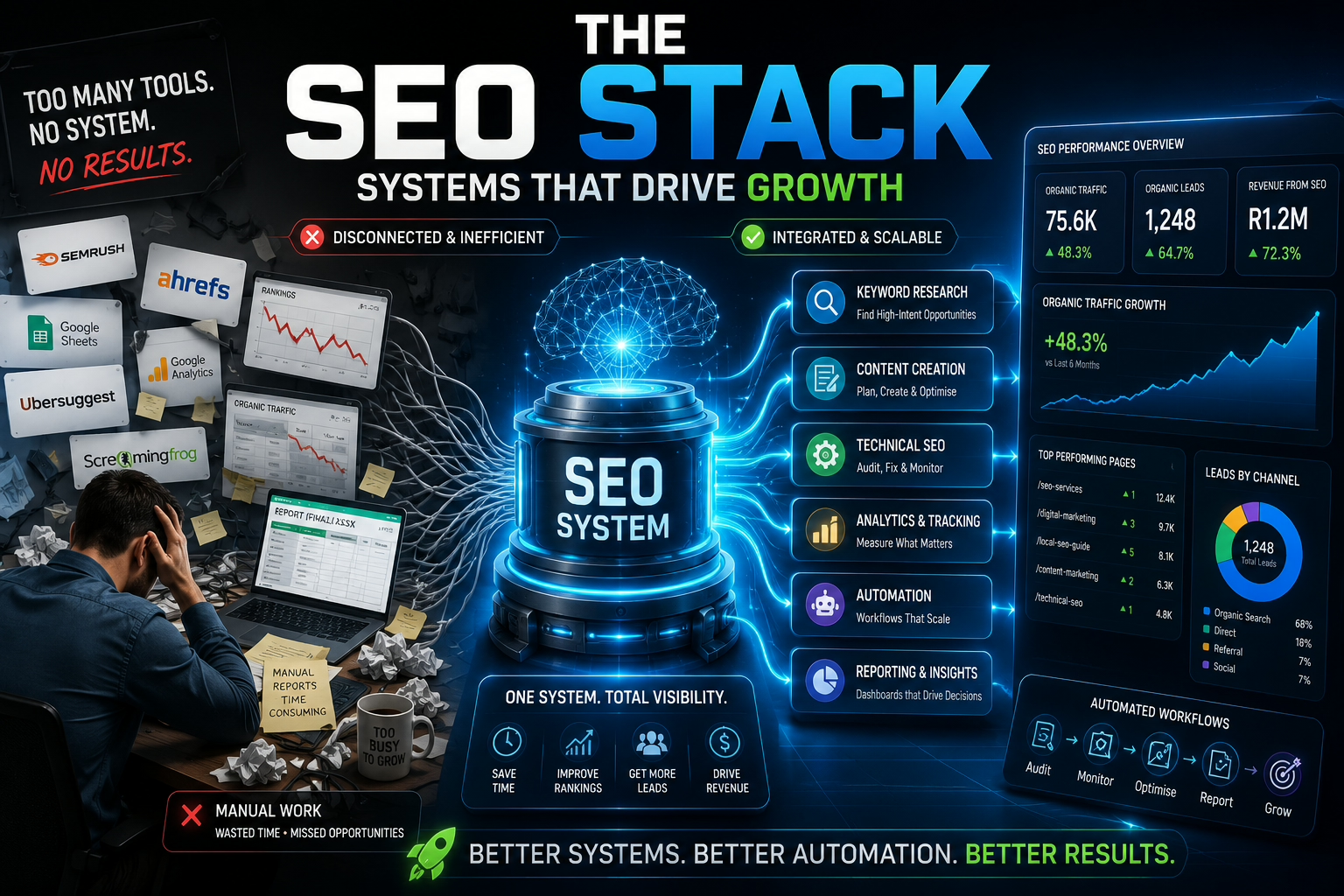
The 2026 SEO Stack for SMEs: Tools, Automations & Systems That Actually Drive Results
SEO in 2026 is no longer a “marketing channel you outsource and hope for the best.”
For South African SMEs, it has become a core operational growth system—one that determines visibility, lead flow, and long-term revenue stability.
Yet most businesses are still running SEO like it’s 2015:
- A few blog posts per month
- Random keyword targeting
- Monthly ranking reports
- No real system behind execution
The result is predictable: inconsistent rankings, weak leads, and unclear ROI.
The businesses winning today are not just “doing SEO better”.
They are running SEO systems, not SEO tasks.
This is where the modern SEO stack comes in.
Why Most SMEs Fail at SEO Operations
SEO failure is rarely about effort. It is almost always about broken systems.
1. Fragmented workflows
Most SMEs use multiple tools that don’t talk to each other:
- Keyword research in one tool
- Content writing in another
- Reporting in spreadsheets
- Tracking somewhere else
There is no central system connecting strategy to execution.
2. Manual, backward-looking reporting
Many SEO reports still focus on:
- Rankings
- Impressions
- Traffic
But none of those directly explain:
- Leads generated
- Revenue impact
- Cost per acquisition
This creates confusion between “activity” and “results”.
3. No keyword architecture
Instead of structured keyword systems, businesses target random terms like:
- “SEO tips”
- “digital marketing blog”
- “how SEO works”
These generate traffic—but not clients.
4. Inconsistent execution
SEO is compounding. But most SMEs:
- Publish for 1–2 months
- Stop
- Restart later
- Lose momentum
Google rewards consistency, not bursts of activity.
5. Weak lead attribution
If you cannot trace:
- Which keyword generated a lead
- Which page converted a user
- Which channel produced revenue
…you cannot optimise SEO properly.
The Core Components of a Modern SEO Stack
A modern SEO system is built in layers—not random tools.
1. Research Layer (Demand Intelligence)
This is where strategy begins.
It focuses on:
- High-intent keyword discovery
- Competitor gap analysis
- Search intent classification
- Market demand mapping
The goal is not “keywords”.
The goal is buyer intent understanding.
2. Technical SEO Layer (Foundation Stability)
This ensures your site can actually perform.
Includes:
- Site speed optimisation
- Indexing control
- Crawl structure
- Mobile performance
- Error detection
If this layer is weak, everything else collapses.
3. Content Layer (Visibility Engine)
This is where rankings are built.
Modern content systems include:
- Pillar pages (core topics)
- Cluster content (supporting articles)
- Internal linking systems
- Semantic optimisation
SEO content is not random writing—it is structured knowledge architecture.
4. Authority Layer (Trust & Reputation)
Search engines increasingly prioritise trust.
This layer includes:
- Backlinks
- Brand mentions
- Citations
- Reviews
- PR visibility
Without authority, rankings plateau.
5. Conversion Layer (Revenue Engine)
This is where most SEO strategies fail.
Even with traffic, businesses lose leads due to weak conversion systems:
- No clear CTAs
- Poor landing pages
- No WhatsApp integration
- No booking flows
- No tracking
Traffic without conversion = wasted opportunity.
6. Reporting Layer (Decision System)
Modern SEO reporting must answer one question:
Did this generate revenue?
Key metrics:
- Leads generated
- Conversion rate
- Cost per lead
- Organic revenue
- Keyword cluster performance
Not vanity metrics like impressions alone.
Essential SEO Tools for SMEs in 2026
A modern SEO stack is not about having more tools—it is about having the right system.
Keyword & Strategy Tools
Used for:
- Identifying demand
- Mapping search intent
- Building keyword clusters
Technical SEO Tools
Used for:
- Site audits
- Performance monitoring
- Indexing checks
Content Systems
Used for:
- Planning content pipelines
- Managing publishing workflows
- Scaling production
Local SEO Tools
Critical for South African SMEs:
- Google Business Profile optimisation
- Local ranking tracking
- Citation management
- Review monitoring
Analytics & Tracking Tools
Used for:
- Behaviour tracking
- Conversion attribution
- Lead source analysis
Reporting Dashboards
Used for:
- Business visibility
- KPI tracking
- Performance decision-making
AI and Automation in Modern SEO Systems
SEO is no longer fully manual—but it is also not fully automated.
The winning approach is human strategy + AI execution support.
AI-assisted content workflows
AI helps:
- Structure content
- Expand topics
- Improve semantic depth
But humans ensure:
- Accuracy
- Authority
- Trust
Automated SEO audits
Systems can now:
- Detect site issues
- Track ranking changes
- Monitor performance drops
This reduces manual workload significantly.
Internal linking automation
Modern systems identify:
- Linking opportunities
- Topic relationships
- Authority flow across pages
AI search visibility tracking
SEO now extends beyond Google:
- AI answer engines
- Entity recognition systems
- Conversational search platforms
Visibility is expanding beyond traditional rankings.
Building an SEO Workflow That Scales
Tools mean nothing without workflow.
1. Content production pipeline
A structured system includes:
- Keyword selection
- Content briefing
- Writing
- Editing
- Publishing
- Linking
Without this, SEO becomes inconsistent.
2. Review & QA systems
Every piece of content should be checked for:
- SEO structure
- Accuracy
- Conversion alignment
- Internal linking
3. Publishing cadence
Consistency matters more than volume.
Successful SMEs typically:
- Publish weekly or bi-weekly
- Focus on clusters, not random posts
4. Optimisation cycles
SEO is never “finished”.
It requires:
- Updating content
- Improving rankings
- Expanding clusters
- Strengthening internal links
SEO Reporting That Actually Matters
Most SEO reporting is misleading.
Businesses should ignore:
- Vanity traffic spikes
- Random keyword rankings
- Impression growth without context
Focus instead on:
- Organic leads
- Revenue from SEO
- Conversion rate
- Cost per acquisition
- Keyword cluster performance
If it doesn’t impact revenue, it is noise.
Common SEO Tool Stack Mistakes
Many SMEs fail not because they lack tools—but because they misuse them.
Common mistakes:
- Buying too many tools
- No integration between systems
- No SOPs or workflows
- Over-automating content without quality control
- No conversion tracking setup
Tools do not create growth—systems do.
The Future of SEO Operations
SEO is evolving into something larger than marketing.
We are moving toward:
- AI-driven search ecosystems
- Entity-based visibility
- Predictive search systems
- Automated optimisation workflows
- Multi-platform authority scoring
In this environment, SEO becomes:
A business intelligence and visibility system—not just a marketing channel.
Practical SEO Stack Framework for South African SMEs
Here is a realistic implementation approach:
Phase 1: Foundation (Month 1)
- Set up analytics + tracking
- Fix technical SEO issues
- Define keyword clusters
- Build core service pages
Phase 2: Growth (Month 2–3)
- Publish structured content
- Build internal linking system
- Optimise Google Business Profile
- Start authority building
Phase 3: Scale (Month 4+)
- Expand content clusters
- Improve conversion systems
- Introduce automation
- Track revenue attribution
Conclusion
SEO success in 2026 is no longer about isolated tactics.
It is about building integrated systems that connect visibility, authority, content, and conversion into one operational engine.
SMEs that treat SEO as a stack:
- Scale faster
- Generate more consistent leads
- Reduce dependency on ads
- Build long-term digital assets
Those that treat SEO as random tasks will continue to struggle with inconsistent results.
The difference is no longer effort.
It is system design.


