
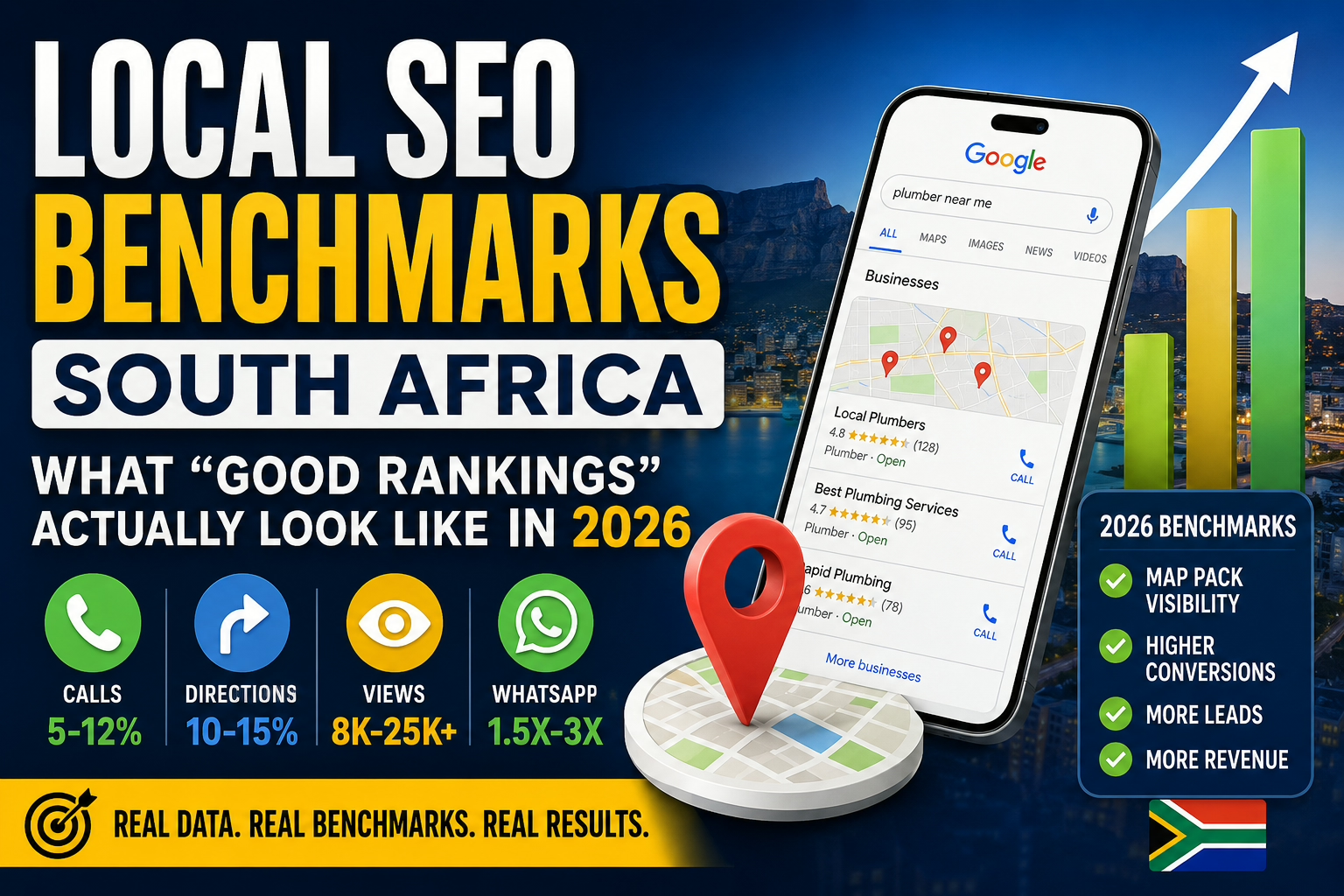
Local SEO Benchmarks in South Africa: What “Good Rankings” Actually Look Like in 2026
Introduction
Most South African businesses still evaluate local SEO performance through a narrow lens: “Are we ranking #1 on Google?”
That approach is outdated.
In 2026, local search is no longer a simple ranking game. It’s a multi-signal visibility system where Google evaluates engagement, proximity, relevance, and conversion behaviour—not just position in the results.
A business can rank #1 in organic search and still lose leads to a competitor dominating the Google Maps pack. Similarly, a business sitting in position #3 on Google Maps can outperform the #1 listing in actual calls and enquiries.
The real shift is this:
- Ranking ≠ performance
- Visibility ≠ revenue
- Clicks ≠ conversions
This is why understanding local SEO benchmarks South Africa is now essential. Without benchmarks, businesses misinterpret data, overestimate performance, and underinvest in the areas that actually generate leads.
This guide breaks down what “good” local SEO performance really looks like in 2026—based on real-world behaviour, not outdated ranking assumptions.
1. What Local SEO Actually Measures in 2026
Modern local SEO is fundamentally behaviour-driven. Google is less interested in static rankings and more focused on how users interact with your listing and website.
Key performance signals now include:
Google Maps visibility
Your presence and frequency of appearance in map-based searches, especially for high-intent queries like “electrician near me” or “lawyer Pretoria”.
Local pack rankings (Map 3-Pack)
The top 3 listings that appear above organic results. This remains the most valuable visibility position in local SEO.
Click-to-call actions
Direct mobile calls from your Google Business Profile (GBP). This is one of the strongest purchase-intent indicators.
Direction requests
Users requesting navigation to your physical location. Particularly relevant for retail, healthcare, and service hubs.
Website visits from local queries
Traffic from geo-modified searches like “plumber Johannesburg North”.
Conversion rates from local traffic
The percentage of users who convert into leads via calls, WhatsApp messages, or form submissions.
In 2026, local SEO is no longer about ranking pages—it is about influencing user actions.
2. Understanding Local Search Intent in South Africa
South African search behaviour has unique characteristics that significantly influence local SEO performance.
“Near me” dominance
Searches like “dentist near me” or “emergency locksmith near me” are heavily mobile-driven and intent-rich.
Mobile-first behaviour
The majority of local searches happen on mobile devices, often during immediate need situations.
WhatsApp conversion culture
Unlike many global markets, South African users frequently bypass websites and convert directly via WhatsApp messaging.
High-intent service searches
Examples include:
- “electrician near me”
- “lawyer Cape Town”
- “plumber emergency Pretoria”
These are not research queries—they are purchase-intent actions disguised as searches.
Why South Africa is different
Compared to global markets, South African users:
- Convert faster (shorter decision cycles)
- Prefer direct communication channels (calls + WhatsApp)
- Rely heavily on trust signals (reviews and proximity)
This impacts what “good performance” actually means in local SEO.
3. Realistic Local SEO Benchmarks (2026 Standards)
To evaluate local SEO performance South Africa, we need measurable baselines.
Google Business Profile performance benchmarks
- Low performance: 500–2,000 monthly views
- Average performance: 2,000–8,000 monthly views
- Strong performance: 8,000–25,000+ monthly views
Click-through expectations:
- 3–8% CTR = average
- 8–15% CTR = strong optimisation
- 15%+ CTR = exceptional listing relevance
Call conversion rates:
- 2–5% = average
- 5–12% = strong
- 12%+ = high-intent dominance
Local Pack (Map 3-Pack) benchmarks
- Top 3 visibility share: 60–90% of clicks in many service industries
- Position volatility: High in dense cities (Cape Town, Johannesburg)
- Impact of proximity: Often outweighs domain authority
Being in the top 3 is not static—it rotates based on user location, search history, and device behaviour.
Organic local rankings
- Page 1 organic results: secondary to map pack for most service businesses
- Map pack dominance: primary lead driver
- Page 2+ visibility: generally negligible for conversions
In competitive South African cities:
- High competition keywords require both GBP and website authority
- Single-page websites rarely compete effectively
Conversion benchmarks
- Lead conversion from local traffic:
- Average: 2–6%
- Strong: 6–12%
- Elite: 12–25% (service-driven niches with strong trust signals)
- WhatsApp conversion rates:
- Often 1.5x–3x higher than website form submissions
- Form submission rates:
- 1–4% typical in service industries
What “good” actually looks like
A business with strong local SEO performance in South Africa (2026) typically achieves:
- Consistent Map Pack visibility
- 8,000–20,000 GBP monthly impressions
- 8–15% CTR
- 5–12% conversion rates
- Strong WhatsApp enquiry flow
4. Key Factors That Influence Local SEO Performance
Google Business Profile optimisation
Critical elements include:
- Primary and secondary categories
- Service listings (fully populated)
- Weekly posts and updates
- High-quality geo-tagged photos
- Continuous review generation
Review quality and quantity
Reviews now function as both:
- Ranking signals
- Conversion triggers
Key patterns:
- 4.5+ star ratings significantly improve CTR
- Recent reviews matter more than total volume
- Keyword-rich reviews enhance relevance signals
NAP consistency
Name, Address, Phone consistency across:
- Websites
- Directories
- Citations
Even minor inconsistencies reduce trust signals.
Proximity and location signals
Google prioritises:
- Searcher proximity
- Service radius relevance
- Physical address strength
This is why rankings fluctuate even within the same day.
Website authority
Supporting SEO elements include:
- Local landing pages per service area
- Internal linking structure
- Localised content relevance
- Schema markup for local businesses
5. Why Ranking #1 Doesn’t Always Mean More Leads
A common misconception is that ranking #1 guarantees business growth. In reality:
- The Map Pack often absorbs the majority of clicks
- Users compare multiple listings before acting
- Calls and WhatsApp clicks matter more than position
- Competitors may appear multiple times across SERP elements
You can rank #1 organically and still lose visibility to:
- Map listings
- Ads
- Competitor reviews
- Knowledge panels
The core issue is simple:
Visibility without conversion optimisation produces traffic, not revenue.
6. Local SEO in Competitive South African Cities
Cape Town
- Highly saturated service markets
- Strong competition for legal, property, and home services
- High importance of reviews and branding
Johannesburg
- Largest keyword competition pool
- High PPC pressure influencing organic behaviour
- Fast-moving SERP volatility
Pretoria
- More moderate competition levels
- Strong opportunity for local dominance with proper optimisation
- Less aggressive keyword bidding pressure
Durban
- Industry-specific competition spikes (tourism, trades)
- Location clustering effects around coastal zones
Each city has a different cost of visibility and SEO difficulty threshold.
7. How to Improve Local SEO Performance (Action Framework)
A structured improvement system:
- Fully optimise Google Business Profile
- Build dedicated local landing pages per service area
- Increase review acquisition velocity
- Strengthen internal linking across service pages
- Improve mobile-first conversion paths (click-to-call, WhatsApp)
- Ensure citation and NAP consistency across platforms
- Target local keyword clusters (not isolated keywords)
8. Measuring Real Local SEO Success
The only KPIs that matter:
- Phone calls from Google Business Profile
- WhatsApp enquiries
- Direction requests
- Organic traffic from local search queries
- Conversion rate from local traffic
- Revenue attribution per channel
Rankings are only diagnostic indicators—not performance outcomes.
9. Common Misconceptions About Local SEO
“Ranking first guarantees leads”
False. Map Pack and ads often outperform #1 organic listings.
“More keywords = better performance”
False. Relevance and intent alignment matter more than keyword volume.
“Google Ads improves local SEO”
Indirect influence only. Paid visibility does not directly improve organic ranking signals.
“One page is enough for all locations”
False in competitive markets. Multi-location SEO requires dedicated landing pages.
Conclusion
Local SEO in 2026 is no longer defined by position—it is defined by performance.
Businesses that continue chasing rankings alone miss the actual system at work: visibility distribution, behavioural signals, and conversion pathways.
The real competitive advantage lies in understanding local SEO benchmarks South Africa and using them to measure what actually matters:
- Visibility quality
- Engagement behaviour
- Conversion efficiency
Local SEO is not a ranking exercise. It is a revenue system powered by search visibility.
Businesses that adopt this benchmark-driven mindset consistently outperform competitors who are still trying to “rank #1” without understanding what that position actually delivers.


