
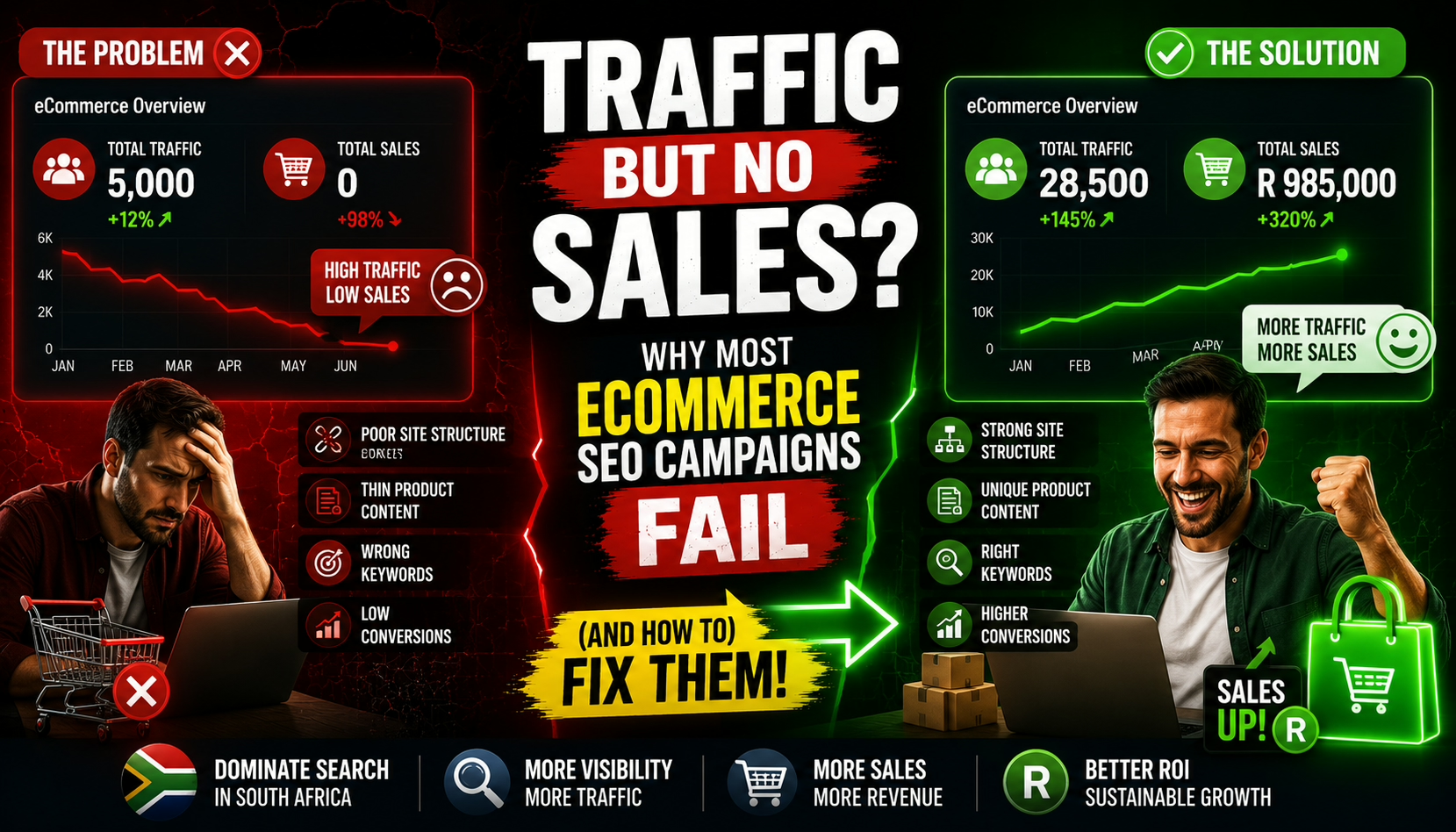
Why Most eCommerce SEO Campaigns Fail (And How to Fix Them)
Most eCommerce SEO campaigns don’t fail because of Google—they fail because of strategy.
If you run an online store in South Africa, you’ve likely experienced this:
You’re getting traffic, your products are indexed, maybe even ranking… but sales aren’t moving.
That disconnect is the core problem with most eCommerce SEO South Africa strategies—they focus on visibility, not revenue.
This guide breaks down why eCommerce SEO fails in real-world scenarios—and more importantly, how to fix it with a system that drives both traffic and conversions.
Why eCommerce SEO Is Different from Normal SEO
Traditional SEO focuses on:
- Content
- Rankings
- Traffic
eCommerce SEO is different because it’s transaction-driven.
Key Differences:
| Traditional SEO | eCommerce SEO |
| Informational intent | Commercial intent |
| Blog content focus | Product + category pages |
| Traffic-driven | Revenue-driven |
Additional Complexity:
- Hundreds or thousands of pages
- Dynamic inventory
- Duplicate product data
- Complex site structures
👉 eCommerce SEO is not just SEO—it’s SEO + UX + conversion strategy
The 7 Biggest Reasons eCommerce SEO Campaigns Fail
1. Poor Site Structure
If your site architecture is messy:
- Google struggles to crawl it
- Users struggle to navigate
Fix:
- Use clear category hierarchies
- Keep URL structures simple
- Ensure internal linking supports navigation
2. Weak Category Pages
Most stores treat category pages as:
- Product listings only
Problem:
They miss massive ranking opportunities.
Fix:
- Add keyword-focused content
- Optimise titles and meta descriptions
- Include internal links to products
3. Duplicate or Thin Product Content
Using supplier descriptions is one of the biggest mistakes.
Problem:
- Duplicate content across multiple sites
- Low uniqueness → poor rankings
Fix:
- Write original product descriptions
- Highlight benefits, not just features
- Include FAQs and user-focused content
4. No Keyword Strategy
Many stores:
- Target random keywords
- Ignore search intent
Fix:
- Map keywords to:
- Category pages
- Product pages
- Focus on buyer intent keywords
5. Ignoring Search Intent
Not all keywords lead to sales.
Example:
- “Best laptops” → research
- “Buy laptop South Africa” → purchase intent
Fix:
Align pages with intent:
- Informational → blog content
- Transactional → product/category pages
6. No Conversion Optimisation
Traffic without conversion = wasted spend.
Problem:
- Poor UX
- Confusing layouts
- Weak CTAs
Fix:
- Improve design
- Simplify checkout
- Add trust signals
7. Lack of Authority
Without backlinks and trust:
- Rankings stall
Fix:
- Build high-quality links
- Increase brand mentions
- Create valuable content
Product Page SEO: What Actually Works
Your product pages are where revenue happens.
Key Optimisation Elements:
1. Title Tags
- Include primary keyword
- Keep it clear and compelling
2. Unique Descriptions
- Avoid supplier copy
- Focus on benefits
3. Structured Data (Schema)
- Product schema
- Reviews
- Pricing
4. Trust Signals
- Reviews
- Ratings
- Guarantees
5. Internal Links
- Link to related products
- Link to categories
👉 A strong product page does more than rank—it converts.
Category Page SEO (The Most Underrated Asset)
Category pages often drive the majority of eCommerce SEO traffic.
Why They Matter:
- Target broader keywords
- Capture high-volume searches
How to Optimise:
Add Content
- 200–500 words of keyword-rich text
Improve UX
- Filters
- Sorting options
Internal Linking
- Link to top products
👉 Treat category pages as landing pages—not just listings
Technical SEO for eCommerce
Technical issues can silently kill performance.
Key Areas:
Site Speed
- Slow sites lose rankings and conversions
Mobile Optimisation
- Most users are mobile
Indexing Issues
- Avoid duplicate pages
- Manage faceted navigation
Crawl Budget
- Prioritise important pages
👉 Technical SEO ensures Google can find and rank your content efficiently
The Role of Content in eCommerce SEO
Content supports the entire funnel.
Types of Content:
Blog Posts
- Drive awareness
Buying Guides
- Help users make decisions
Comparison Pages
- Capture high-intent traffic
👉 Content bridges the gap between search and purchase
Conversion Optimisation (Where Most Revenue Is Lost)
This is where most eCommerce sites fail.
Key Improvements:
UX Design
- Clean layout
- Easy navigation
Trust Signals
- Reviews
- Secure checkout
- Guarantees
Checkout Optimisation
- Reduce friction
- Offer multiple payment options
👉 Increasing conversion rates often delivers more ROI than increasing traffic.
Real Example: Fixing an eCommerce SEO Campaign
Before:
- Traffic: 3,000/month
- Conversion rate: 1%
- Sales: Low
Issues:
- Duplicate product content
- Weak category pages
- Poor UX
Fixes:
- Rewrote product descriptions
- Optimised categories
- Improved site speed
After:
- Traffic: 5,000/month
- Conversion rate: 3%
- Sales: Significant increase
👉 Same traffic strategy—better execution.
SEO vs Paid Ads for eCommerce
SEO:
- Long-term growth
- Lower cost over time
Google Ads:
- Immediate traffic
- Higher cost per sale
Best Strategy:
- Use Ads for testing
- Use SEO for scaling
👉 The winning approach is hybrid
How to Build a Winning eCommerce SEO Strategy in 2026
Step 1: Fix Technical Issues
Step 2: Optimise Category Pages
Step 3: Improve Product Pages
Step 4: Build Content
Step 5: Focus on Conversions
Step 6: Build Authority
👉 Prioritise what drives revenue—not just rankings.
FAQ: eCommerce SEO South Africa
Why is my eCommerce site not ranking?
Likely causes:
- Weak content
- Poor structure
- Lack of authority
How do I optimise product pages for SEO?
- Use unique content
- Add structured data
- Include trust signals
Is SEO worth it for online stores?
Yes—especially for long-term growth and lower acquisition costs.
How long does eCommerce SEO take?
Typically 3–6 months for traction, 6–12 months for strong results
Should I use SEO or Ads?
Use both—but strategically.
The Bottom Line: SEO Alone Doesn’t Sell Products
Here’s the truth most agencies won’t tell you:
Ranking your products is not enough.
If your site:
- Doesn’t convert
- Doesn’t build trust
- Doesn’t guide users
You will lose sales—no matter how much traffic you get.
Ready to Fix Your eCommerce SEO Strategy?
If your online store is:
- Getting traffic but not converting
- Struggling to rank competitively
- Not delivering ROI
Then it’s time to shift from SEO tactics to SEO strategy.
A data-driven eCommerce SEO approach will help you:
- Increase visibility
- Improve conversions
- Scale revenue
Because in 2026, the stores that win aren’t the ones with the most traffic…
They’re the ones with the best-performing systems.


