
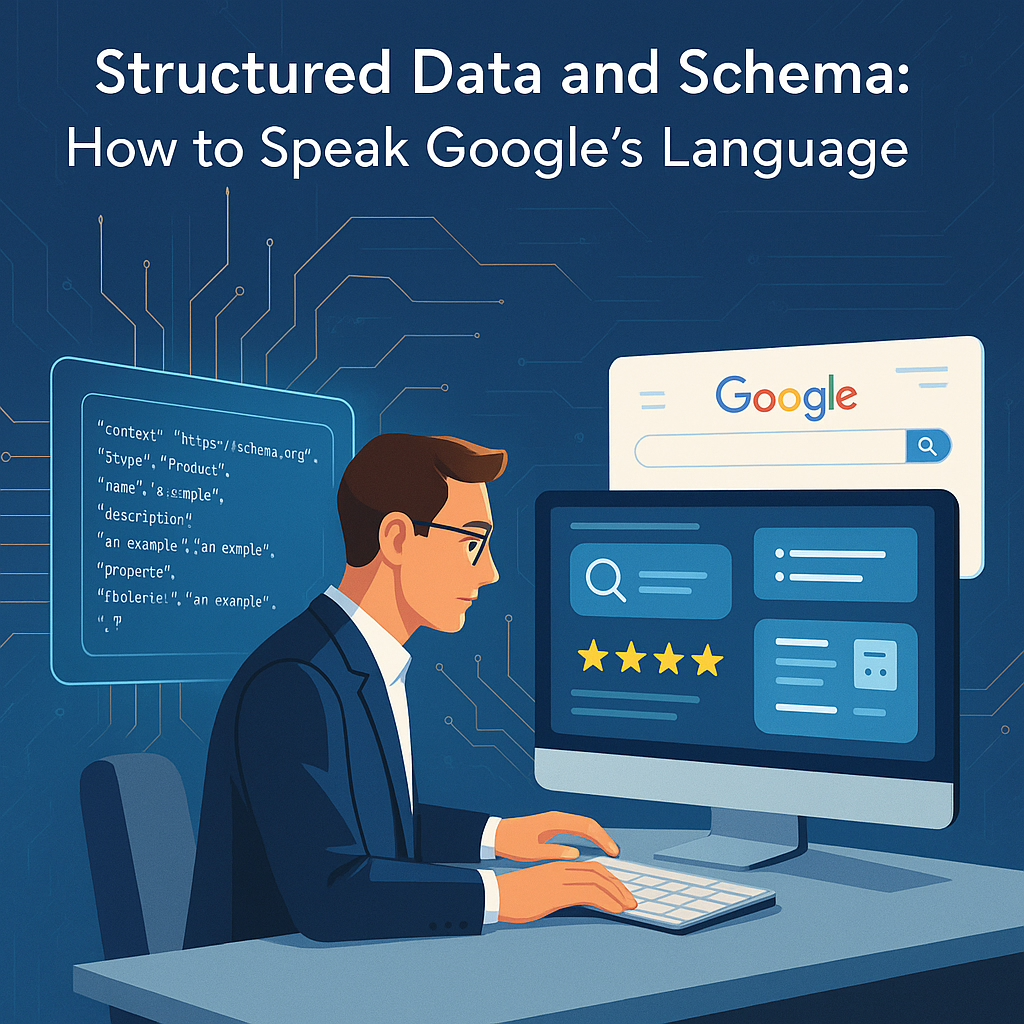
Structured Data and Schema: How to Speak Google’s Language
You might have the best-written web pages in your industry — but if Google can’t understand them properly, they’ll never reach their full potential.
Search engines don’t read websites like humans do. They need context — clear, machine-readable signals that explain what your business offers, what your content means, and how it fits together.
That’s exactly what structured data and Schema.org deliver.
They translate your content into a language Google understands — and reward you with richer visibility, higher click-through rates, and stronger credibility.
1. From Content to Context: Why Structured Data Matters
Traditional SEO focuses on optimising words, titles, and links. Structured data goes a level deeper — it helps search engines interpret meaning.
By adding structured data markup to your site, you’re giving Google context:
“This isn’t just text — it’s a product, a service, a review, or a local business.”
That clarity enables features like star ratings, prices, FAQs, and knowledge panels to appear directly in search results. In short, structured data lets you speak Google’s language — and that’s how you stand out.
2. What Is Structured Data and Schema.org?
Structured data is a type of code embedded in your website that describes content using a standard vocabulary — Schema.org.
It tells search engines exactly what’s on the page, using entities and properties like:
- @type: The kind of thing (e.g., Product, Service, Organization).
- name / description / price / review: Supporting details.
While there are multiple formats, JSON-LD (JavaScript Object Notation for Linked Data) is the preferred option — it’s clean, flexible, and officially recommended by Google.
Simply put:
Schema markup is how your website says, “Hey Google, here’s what this page is really about.”
3. The Business Value: Beyond Rankings
Structured data doesn’t just improve technical SEO — it enhances business performance.
Key Benefits
✅ More Visibility in SERPs – Rich snippets make your listing larger and more informative.
✅ Higher Click-Through Rates – Reviews, prices, and FAQs make users more likely to click.
✅ Qualified Traffic – Users see what to expect before visiting, improving conversion intent.
✅ Stronger Brand Trust – Consistent data (name, address, logo, social links) builds credibility.
✅ Eligibility for Enhanced Features – Knowledge panels, product carousels, and voice search integration.
Structured data doesn’t replace great content — it amplifies it.
4. High-Impact Schema Types for Small Businesses
Here are the most valuable Schema types every SME should consider:
🏢
Organization / LocalBusiness
Add company details: name, logo, address, contact info, and social profiles.
Improves consistency across Google, Maps, and Knowledge Graph.
💼
Service / Product
Show what you offer, including pricing, descriptions, and availability. Perfect for service pages or e-commerce products.
⭐
Review / AggregateRating
Display authentic customer feedback and average ratings — a proven CTR booster.
❓
FAQPage
Include structured FAQs that appear directly in Google results as expandable drop-downs.
🧭
BreadcrumbList
Clarifies site structure and helps Google display breadcrumb navigation in SERPs.
✍️
Article / BlogPosting
Enhances blog visibility with author, publication date, and featured image. Supports E-E-A-T (Experience, Expertise, Authoritativeness, Trustworthiness).
Each type helps Google connect the dots between your content and your business.
5. Implementation Basics — Keep It Simple and Safe
You don’t need to be a developer to add structured data safely.
Best Practices
- Use JSON-LD (Google’s preferred format).
- Keep markup accurate — it must match what’s visible on the page.
- Place it in the <head> or via a CMS/Google Tag Manager.
- Validate it using Google’s Rich Results Test.
- Monitor enhancements in Search Console for errors and performance gains.
Pro Tip: Always ensure that reviews, prices, or service details exist on the actual page. Google penalises “fake markup.”
6. Common Mistakes to Avoid
Even well-intentioned businesses make schema mistakes that can undo progress.
🚫 Fake or gated reviews: Marking hidden content breaks guidelines.
🚫 Wrong types or missing fields: Misused schema causes validation errors.
🚫 Orphaned markup: Markup not reflected in visible text confuses crawlers.
🚫 Site-wide duplication: Repeating irrelevant schema across all pages.
🚫 Ignoring images: Image URLs are mandatory for many schema types.
Structured data must always represent truthful content. Accuracy builds both user and algorithmic trust.
7. Quick-Start Checklist for Ethical Schema Success
✅ Add Organization / LocalBusiness schema across your site.
✅ Include Service or Product markup for top pages.
✅ Use FAQPage schema where Q&A content appears.
✅ Optimise Article schema for all blog posts.
✅ Validate, fix errors, and request re-indexing.
✅ Track click-through rate and impressions growth in Search Console.
Small, consistent schema improvements compound over time — just like good SEO.
8. Advanced Opportunities for Growing Brands
As your website scales, schema can become a strategic asset:
- @graph connections: Link your Organisation, Services, and Locations for cohesive data relationships.
- Speakable schema: Prepare for voice search adoption.
- VideoObject and HowTo schema: Boost engagement on tutorials and visual content.
- Entity linking: Help Google connect your brand to known entities in the Knowledge Graph.
These advanced techniques signal authority and relevance — positioning your business as an expert in its field.
9. EC Business Solutions: Translating Your Data into Growth
At EC Business Solutions, we help businesses “speak Google’s language” fluently.
Our technical SEO specialists implement structured data that:
- Enhances visibility with rich results.
- Strengthens brand identity across platforms.
- Aligns perfectly with Google’s best practices.
- Turns analytics insights into actionable improvements.
We don’t just optimise for algorithms — we optimise for people, clarity, and long-term credibility.
10. Conclusion — Give Google the Clarity It Needs
Structured data is the bridge between what your website says and what Google understands.
When done right, it transforms invisible content into powerful, clickable search results — helping your business reach the audience that matters most.
👉 Speak Google’s language with Professional SEO Services from EC Business Solutions — where technical expertise meets strategic growth.


