
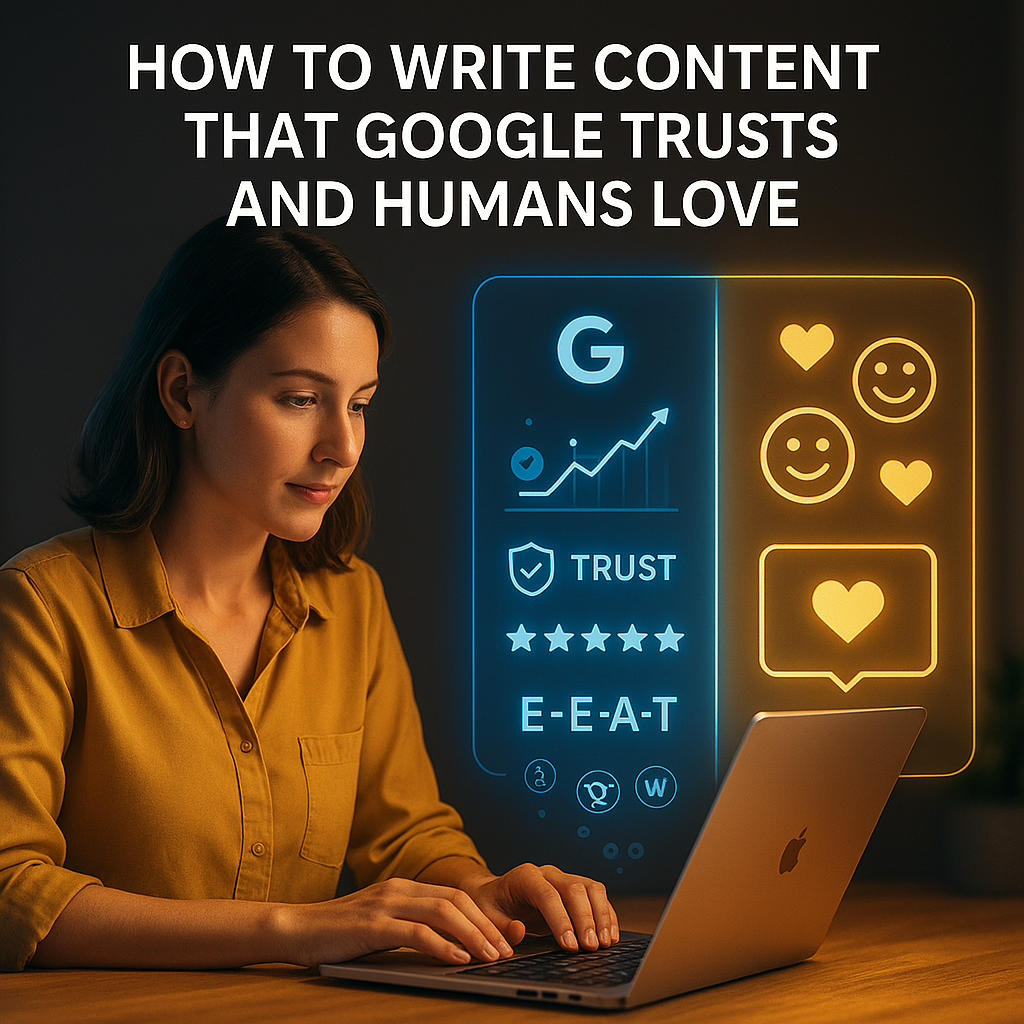
How to Write Content That Google Trusts and Humans Love
In today’s digital world, content is more than a marketing tool — it’s a trust-building system.
But many businesses still face a familiar challenge: how do you write content that pleases Google and genuinely connects with people?
The answer lies in balance — blending SEO structure with authenticity, purpose, and human understanding. The best-performing content today doesn’t just rank; it resonates.
1. The Balance Between Algorithms and Audiences
For years, SEO revolved around technical rules — keywords, meta tags, and backlinks. But Google’s evolution into an AI-powered search engine means it now prioritises helpful, trustworthy, and experience-based content.
At the same time, audiences have become more discerning. They expect content that speaks their language, provides real answers, and earns their confidence.
The truth is simple: if your writing builds trust with readers, Google will trust it too.
2. Why Trust Is the Foundation of SEO Success
Google uses a framework called E-E-A-T — Experience, Expertise, Authoritativeness, and Trustworthiness — to evaluate online content.
- Experience: Do you have first-hand knowledge of what you’re writing about?
- Expertise: Are you qualified to speak on this topic?
- Authoritativeness: Do others recognise your brand or content as reliable?
- Trustworthiness: Is your information accurate, transparent, and honest?
When your content demonstrates these qualities, it sends strong credibility signals to both Google and users. Trust isn’t just an emotional response — it’s a measurable ranking factor.
3. Writing for Google: Structure and Signals That Matter
Let’s be clear — Google doesn’t “read” content like humans do; it analyses patterns and structure. To help it understand your message, focus on:
✅ Clarity and hierarchy: Use descriptive headings (H2, H3) that outline your key points.
✅ Topical depth: Cover your subject thoroughly — address related questions and subtopics.
✅ Internal linking: Connect pages logically to build topic authority.
✅ Credible sources: Cite reputable references or include original data.
✅ Schema markup: Help search engines interpret your page type (article, FAQ, product, etc.).
This approach ensures your content is technically sound — the foundation of Google’s trust.
4. Writing for Humans: Clarity, Emotion, and Connection
While Google values structure, your readers value understanding.
People don’t want jargon or filler — they want insight, empathy, and clear answers. The most loved content feels human:
- It speaks naturally and conversationally.
- It tells stories or examples that feel relatable.
- It explains why something matters, not just how it works.
For example, rather than saying:
“Effective SEO involves implementing on-page and off-page optimisation strategies.”
Say:
“Good SEO is like reputation management — the more people trust your business, the more visible it becomes online.”
Simple, engaging, and memorable.
5. The Formula for Trustworthy, High-Impact Content
Here’s a proven framework to create content that both Google and humans love:
Google + Humans = Lasting SEO Growth
- 🎯 Start with Purpose: What problem does this article solve?
- 🧠 Prove Expertise: Use data, experience, or credible sources.
- 💬 Be Transparent: Avoid exaggerations or vague claims.
- ❤️ Add Empathy: Write as if explaining to a real client or colleague.
- 🔁 Finish Strong: End with a practical takeaway or next step.
This formula works because it mirrors how people (and algorithms) define value: through clarity, authenticity, and relevance.
6. Common Mistakes That Break Trust
Even the best SEO strategies fail if your content feels inauthentic or manipulative. Avoid these common pitfalls:
🚫 Keyword stuffing or awkward repetition.
🚫 Publishing AI-generated text without human review.
🚫 Copying competitors instead of offering original insight.
🚫 Misleading headlines or overpromising results.
🚫 Ignoring accuracy and fact-checking.
These errors don’t just harm rankings — they damage credibility. Once readers lose trust, it’s difficult to win it back.
7. Checklist: Writing Content Google Trusts and Humans Love
Before you publish, review this simple checklist:
✅ Understand search intent before writing.
✅ Use conversational language that sounds natural aloud.
✅ Support claims with data or real examples.
✅ Use short paragraphs, clear subheadings, and bullet points.
✅ Include internal links to related pages.
✅ Optimise for readability on mobile devices.
✅ End with a clear takeaway or action.
If you can tick every box, your content is already aligned with Google’s Helpful Content guidelines.
8. Why Authenticity Wins in 2025
With AI-generated text flooding the internet, authentic human content stands out more than ever.
Google’s latest updates reward creators who show first-hand experience and genuine perspective. Readers can feel the difference too — between content written to rank and content written to help.
When businesses write with integrity, transparency, and expertise, algorithms amplify that authenticity.
In short: write for people, optimise for Google.
9. Conclusion — Content That Builds Trust Is Content That Performs
Google’s algorithms may evolve, but the core principle of SEO remains timeless: trust equals visibility.
When your content answers questions honestly, reflects real expertise, and connects emotionally, both Google and your audience reward you.
Sustainable SEO growth isn’t about chasing trends — it’s about consistently delivering value.
👉 Build a content strategy that earns clicks, conversions, and confidence with Professional SEO Services from EC Business Solutions — crafted to help your business write content that Google trusts and humans love.


